
Bronze-age wooden well found in Benson
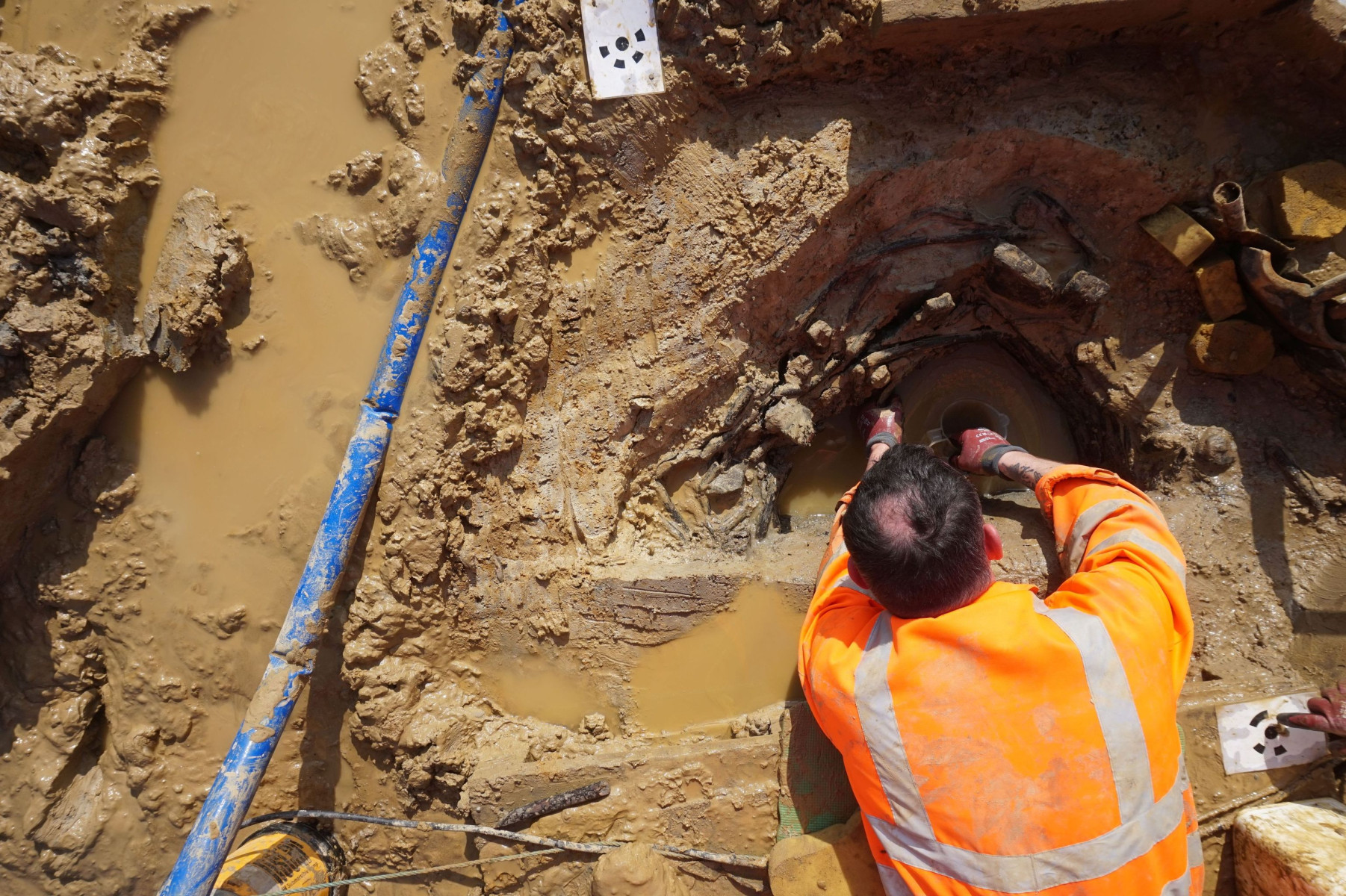

A well-preserved wooden well of suspected late Bronze-Age date, was found recently during archaeological excavations at the site of Oxfordshire County Council's project to build the south-westerly section of the Benson Relief Road.
The excavation was undertaken by Oxford Archaeology working on behalf of the council. It uncovered the significant find during an archaeology ‘strip, map and sample’ exercise that was a planning condition for the scheme, to ensure any archaeological finds are recorded.
Councillor Judy Roberts, Oxfordshire County Council’s Cabinet Member for Infrastructure and Development Strategy, said: “This find gives fantastic insight into the area’s past land use. It is thought the well may have been used for agricultural irrigation purposes for settlements nearby. Archaeological surveys like this are an important part of the process of delivering construction schemes. They help us identify and understand past residents of the area and record them for future generations.
“Other evidence of Bronze Age activity has previously been identified in and around Benson and as far as Wallingford. The excavations undertaken as part of the Benson Relief Road help to further our understanding of this rich landscape and demonstrate how widespread the activity was.”
John Boothroyd, Senior Project Manager at Oxford Archaeology, said: “When investigating what appeared to be a standard pit for the site, the archaeological team started exposing the remains of a preserved wooden post driven vertically into the ground. Further excavation revealed that these posts formed the uprights of a wattle structure that lined the edge of the pit. Preservation of wooden structures from this period is rare and the remains have survived all this time, due to being buried in waterlogged ground.
“Despite the extremely challenging conditions, the team were able to expose and fully record the well in the ground. The specialist soil samples that were collected will also help establish what the surrounding landscape would have been like, and the intensity to which it was settled, when the well was actively being used.”
The timber structure was digitally recorded before experts from Oxford Archaeology gently dismantled it by hand for removal. A sample of the preserved wood has been sent for further specialist recording that will identify the type of wood used, and if any evidence of the tools used to cut and shape the timbers can be determined.
Various other pieces of struck flint, animal bone and pottery used for storage and waste, were also found on site. The wood, along with the rest of the artefacts recovered from the site will be stored with the Oxfordshire Museum Service, and the results of the excavation published in a full report.
Images - provided courtesy of Oxford Archaeology
- Image 1 shows the well as it was being excavated
- Image 2 is a close-up of the well, showing the wattle structure
Click Sign up to hear from us and receive the latest news and updates in our fortnightly newsletter, Your Oxfordshire.