
Oxford city centre continues to thrive four months into temporary congestion charge
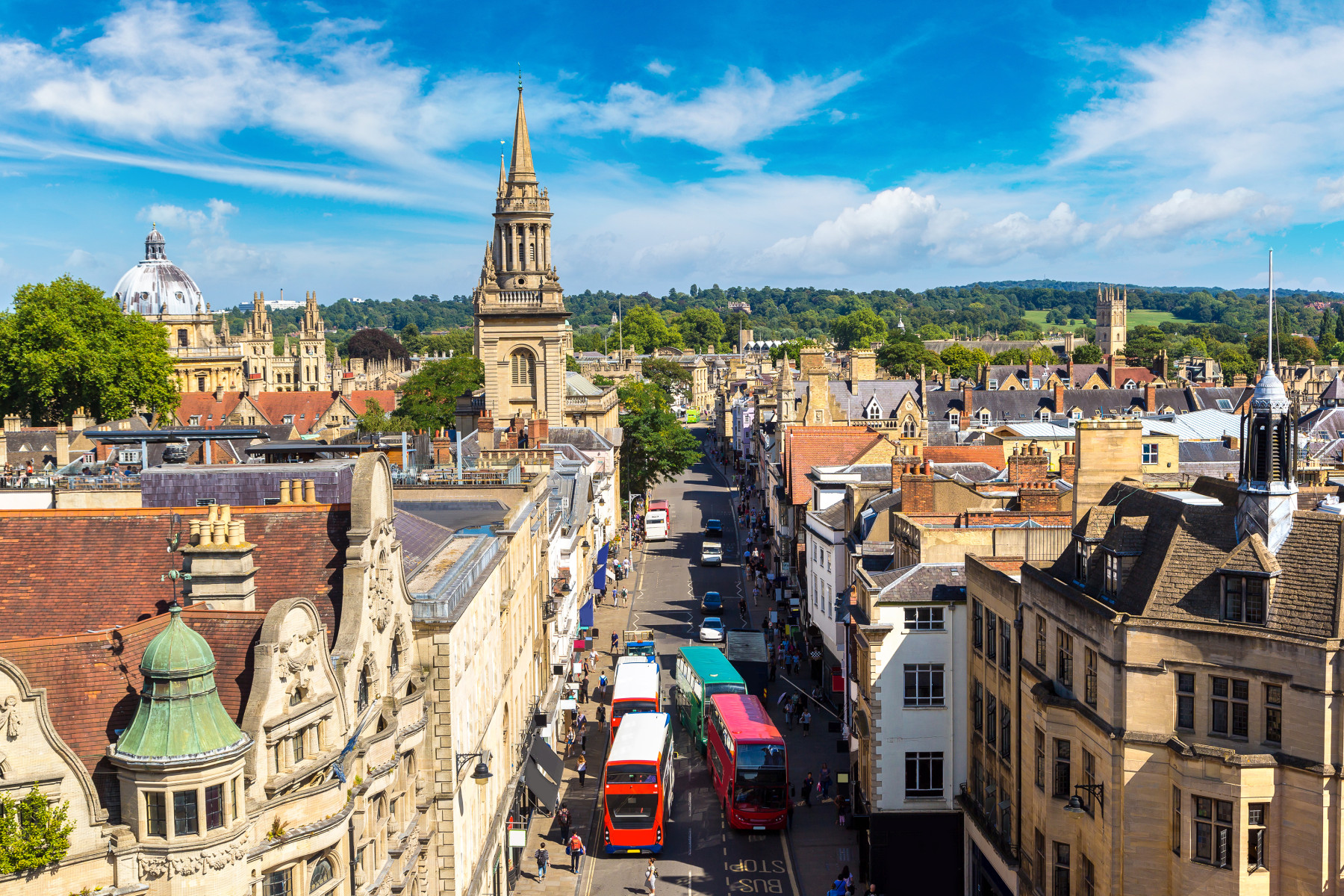
New data provided by MRI Software shows pedestrian numbers in Queen Street increased by one per cent during the four months after Oxford’s temporary congestion charge was introduced, compared to the same period the previous year.
Oxfordshire County Council is publishing monthly data to help monitor Oxford’s temporary congestion charge. Footfall and spend figures are not currently being published due to challenges with available data, but this new source of data provides a snapshot in one area of the city.
The county council’s temporary congestion charge is at points on six roads in Oxford and was introduced on 29 October. It is designed to reduce traffic in the city while Botley Road remains closed, and the start of the council’s traffic filter trial is delayed.
Councillor Andrew Gant, Oxfordshire County Council’s Cabinet Member for Transport Management, said: “It’s reassuring to see that from the limited footfall data we now have, the Queen Street figures are positive, particularly in comparison with other town and city centres which have seen some decline, according to the same data provider. It gives an indication that Oxford city centre remains an attractive and thriving destination for shopping and leisure.
“This small increase may be a result of many factors, and we cannot attribute it to the temporary congestion charge. It’s still too early to draw any firm conclusions about data trends and the data we’re collecting will help us build a picture over time of how the temporary charge is working.
“We’re working hard to secure more detailed footfall and consumer spending data for locations across Oxford, but there have been some frustrating challenges sourcing this data.”
Monitoring data for the scheme is now published for November, December and January, with some data sets not yet available. Footfall and spend figures are not published while anomalies are being investigated and will be added as soon as they are available. Travel patterns and external factors will continue to change. The data that is being collected will build a picture over time of how the scheme is working and highlight any issues the council may need to address.
Notes
About footfall and spend data
The county council undertook to publish monthly monitoring data in relation to the temporary congestion charge. A key part of this data set is monitoring footfall and consumer spending. For this, the council engaged a new external supplier, Huq Industries.
Huq provides footfall and consumer spend data for over 90 UK local authorities and business improvement districts, as well as over 300 global brands and retailers across three continents. Huq’s current and historic data is available for any location in Oxfordshire, as it does not rely on physical on-street equipment.
Footfall data for November was provided by Huq and published in December. Through comparisons with other data sources, which only became available in January, a number of anomalies were identified which could not be explained. The data was published in good faith and as soon as the anomalies became apparent the data was removed, so as not to be misleading. Huq has identified the cause of the issue and are working to correct it. The county council’s decision to pause its use of the Huq data for now does not affect the data itself, nor what is or will be available. Huq continues to collect and hold the data regardless of whether the council is currently using it, so there’s no interruption in data collection. As soon as the data is available and validated, it will be published.
A representative from Huq explained:
“We identified that a rebalancing of the dataset implemented mid-last year had an unintended impact on very densely populated areas. This resulted in certain locations showing inflated figures compared to expected real-world levels.
“To address this properly, rather than apply a surface-level correction, we have signed a new agreement with an additional data provider. This will effectively double our panel size and increase our raw data points by approximately 3x. The goal is to materially strengthen the underlying data set so the modelling has a larger and more stable base to work from, improving robustness, consistency, and reliability moving forward.
“The engineering team already has access to the new data and is finalising the last validation and modelling checks. We will incorporate this into our core methodology early next week and we expect this update to bring late-2025 footfall levels more closely in line with real-world activity.”
In the meantime, the council has procured pedestrian data from another supplier (MRI Software). MRI data is used by over 200 UK local authorities and widely used in the retail and estate management sectors.
Unlike Huq, MRI uses physical on-street equipment to count pedestrians, so before and after data is only available for locations where a counter has been installed for some time. Queen Street in Oxford city centre is the only public location in Oxfordshire with an MRI monitor.
The MRI data shows that pedestrian numbers in Queen Street increased by 1 percent during the period November 2025 to February 2026, compared to the same period the previous year. Meanwhile the corresponding figure for all UK high streets indicates a decline in footfall of just over 1.5 percent. This data will be published on the council’s website as part of the February update, towards the end of March.
The council is currently investigating using other sources of data, such as Vivacity Labs and Telraam counters that are already in place in several locations around the city. However, both technologies are very sensitive to lighting conditions, meaning reliable, comparable data may only be available during daylight hours, providing only a partial picture of trends.
Consumer spend data is currently being verified, including making comparisons with other data sources before being published.
Residents or businesses with comments or concerns about the congestion charge can email ccharge@oxfordshire.gov.uk
About the temporary congestion charge
A charge of £5 per day is payable to drive a car without a permit through the six congestion charge locations. Cars with permits and all other vehicles can go through the temporary congestion charge locations for free.
There are permit types available that allow free travel through the congestion charge points. Permit applications covering different circumstances can be made from the county council website, including for residents, traders, carers and blue badge holders. To find out about different permits and exemptions, visit the congestion charge website.
Those driving in a car without a permit can pay the congestion charge online by midnight on the day after driving through one of the six charge locations – no account is needed. There is also an option to pay by phone.
Locations and operating times:
· Marston Ferry Road and Hollow Way - Monday to Saturday - At peak times between 7am to 9am and 3pm to 6pm
· Hythe Bridge Street, St Cross Road, St Clement’s Street and Thames Street - Monday to Sunday - 7am to 7pm
The scheme will remain in place until the traffic filters trial is introduced, once Botley Road reopens, expected to be August 2026.
Sign up to hear from us and receive the latest news and updates in our fortnightly newsletter, Your Oxfordshire.