
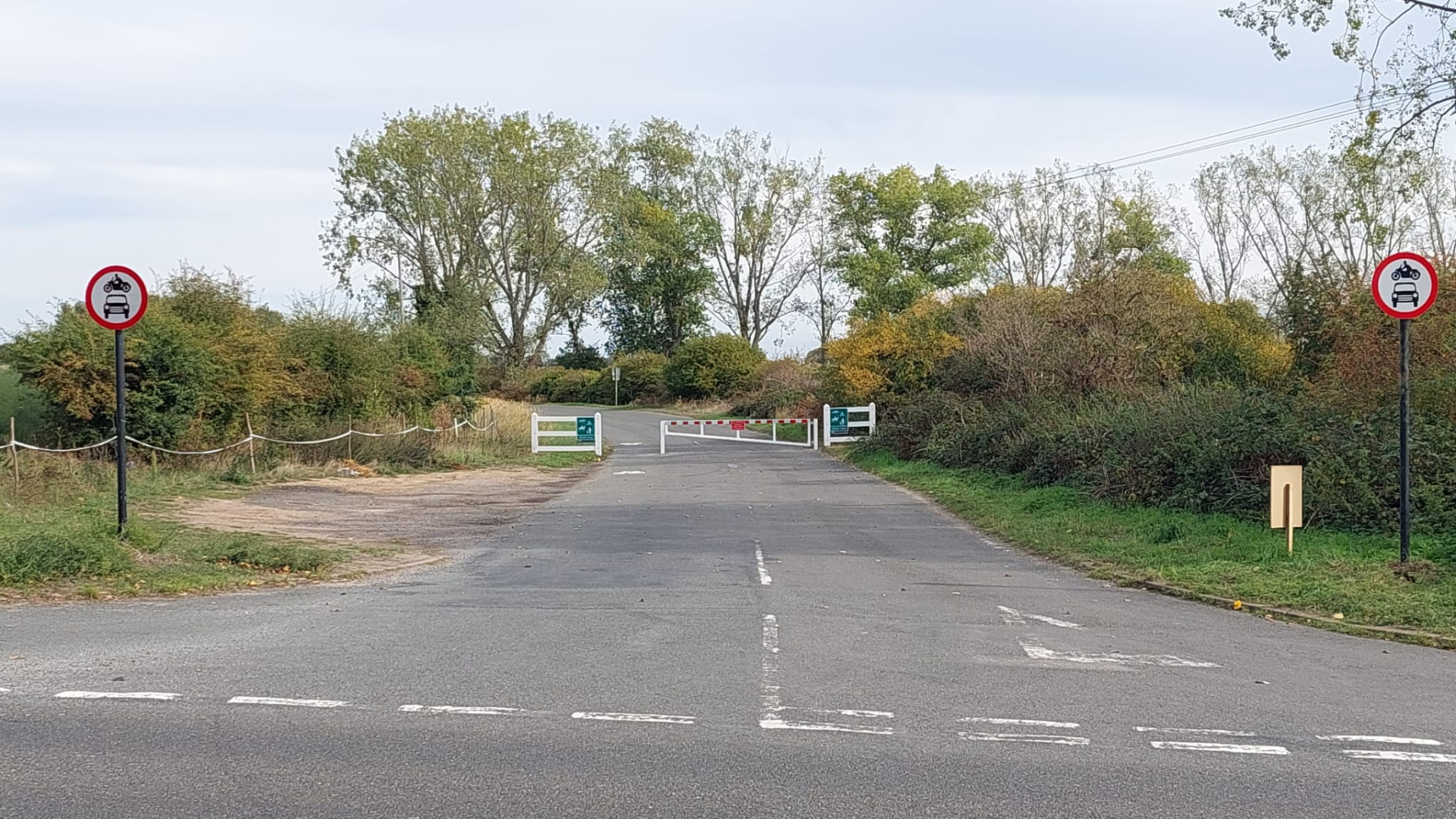
Consultation opens on Shepherd's Pit Lane quiet lane trial
A public consultation opens today (Monday 28 September) on the Shepherd's Pit Lane quiet lane trial, with Oxfordshire County Council inviting residents, businesses and the local community to have their say on the measures to improve active travel.
A gate has been installed at the Bayswater Road end of Shepherd's Pit Lane, in the parish of Stanton St John, with the aim of creating safer and more attractive routes for people walking, wheeling, cycling and horse riding, by reducing the impact of motor traffic.
Access will be maintained for residents, farmers, landowners, businesses and emergency services, with other through-traffic routed along the B4027 Wheatley Road and Bayswater Road, which was already the most direct way.
Councillor Gareth Epps, Oxfordshire County Council’s Cabinet Member for Transport Management, said: “Quiet lanes are part of our commitment to making roads safer and encouraging sustainable travel. By removing through traffic, quiet lanes can reduce vehicle numbers and speeds, lower the risk and severity of collisions, and make minor roads feel calmer and safer for people who walk, cycle, wheel and ride horses.
“The Shepherd’s Pit Lane quiet lane was developed following local concerns about road safety and through engagement with the local community. It will now be trialed using the same locally led and evidence-based approach that will be applied to future quiet lane schemes across Oxfordshire.
“This trial is an opportunity to see how a ‘fully filtered’ quiet lane works in practice, gather feedback from local people and collect robust evidence before any decisions are made about its future. I would encourage anyone with an interest in the trial to share their views.”
The consultation will run for at least six months with the trial set to run for at least a year.
The Shepherd's Pit Lane trial is the first to be delivered through the council's new countywide quiet lanes policy and pilot programme, approved in May 2026.
As part of this policy, gates or bollards will be used in quiet lane trials, reflecting updated evidence that signage only lanes do not reduce traffic or speed enough to improve safety.
The Shepherd's Pit Lane trial was developed in response to local concerns about road safety and limited opportunities for safe walking and cycling between Stanton St John village and Oxford. It has been shaped by local engagement carried out during 2025 and 2026, including discussions with village residents, landowners and the parish council.
Throughout the trial, the council will monitor the scheme and gather evidence, including consultation feedback and monitoring data. At the end of the experimental period, the Cabinet Member will make a public decision on whether the measures should remain in place, be amended or removed.
Scheme information and the consultation survey are available on the county council’s digital engagement and consultation platform, Let’s Talk Oxfordshire.
ENDS
Notes to editors
· Visit the consultation webpage:
letstalk.oxfordshire.gov.uk/shepherdspitlane_quiet_experiment2026
· The consultation survey will be open for at least the first six months of the trial, which will last for at least 12 months and a maximum of 18 months.
· The restriction is a locked gate with a 1.7m gap to allow people walking, wheeling, cycling and horse riding to pass through at all times. The restriction is located at the Bayswater Road end of Shepherd's Pit Lane and includes verge protection measures and signage. A reduced speed limit of 20 miles per hour is also in place.
· The measures will be implemented using an Experimental Traffic Regulation Order (ETRO), where they can be tested in place. ETROs are used when it is difficult to assess the impacts of a scheme beforehand, but the cost of implementation is relatively low. At the end of the six-month period, the council assesses the impacts, including any letters of support or objections, and decides whether to confirm, cancel or extend the ETRO for up to 12 months longer (18 months in total) to allow further consultation and monitoring.
· Traffic surveys were undertaken in October 2025 and will be repeated as part of the monitoring process. During the trial, the council will monitor traffic volumes, vehicle speeds, road safety outcomes and local feedback.
· Oxfordshire County Council's new programme, approved by cabinet in May 2026, will pilot up to ten quiet lanes across the county using a consistent assessment, consultation and monitoring process. The county council continues to assess other applications before confirming which other pilot sites will go ahead.
· Oxfordshire's quiet lanes policy uses filtering rather than signage alone because evidence reviewed by the council, including Department for Transport evaluations and findings from the Transport Research Laboratory (TRL), found that sign-only quiet lanes generally deliver little or no reduction in traffic volumes or vehicle speeds. The evidence indicates that reducing through traffic is necessary to achieve meaningful safety, accessibility and active travel benefits.
· Learn more about quiet lanes by visiting our website: www.oxfordshire.gov.uk/quiet-lanes-programme