
Nearly 200 community schemes benefitted from more than £50m of developer contributions last year
The rate at which developer contributions are being spent on projects to help Oxfordshire’s affected communities has increased over the past 12 months.
In 2025-26, Oxfordshire County Council spent £50.4 million of developer contributions – known as section 106 (S106) funding – compared to an average of £30.7m in the previous three financial years. Last year’s spending almost matched the £50.9m figure it received in new S106 funding during the same period.
The 2025-26 money was used on almost 200 projects, most of which (£35.6m) was invested in 38 education projects, including new schools, additional classrooms, nursery provision and school expansions.
Transport infrastructure projects, libraries and public transport and pedestrian schemes also benefited from the funding.
Councillor Dan Levy, Oxfordshire County Council’s Cabinet Member for Finance and Property, said: “Developer contributions are essential for the wellbeing of Oxfordshire’s residents and there is an impressive list of projects in our s106 funding report for last year to show that.
“We have an excellent record of securing S106 contributions from developers to pay for the infrastructure that communities need. Residents would expect nothing less from us to make sure their schools, social care, roads, transport, and other services can cope with housing expansion.
“Now we are matching that success when it comes to delivery. Last year we spent more than £50m of s106 funding – almost as much as we received in the same period. This is an outstanding achievement considering many of these projects are often large and complex, can take many years to come forward, and have specific trigger points before payments can be made.”
Education projects last year included £14.1m for Grove Airfield Secondary School and £7.4m for the new St Nicholas Primary School in Wallingford, while £3.1m was invested in expanding Witney’s Wood Green School, alongside £2.1m for the expansion of Marlborough School in Woodstock and £1.8m for additional primary school capacity in Shrivenham.
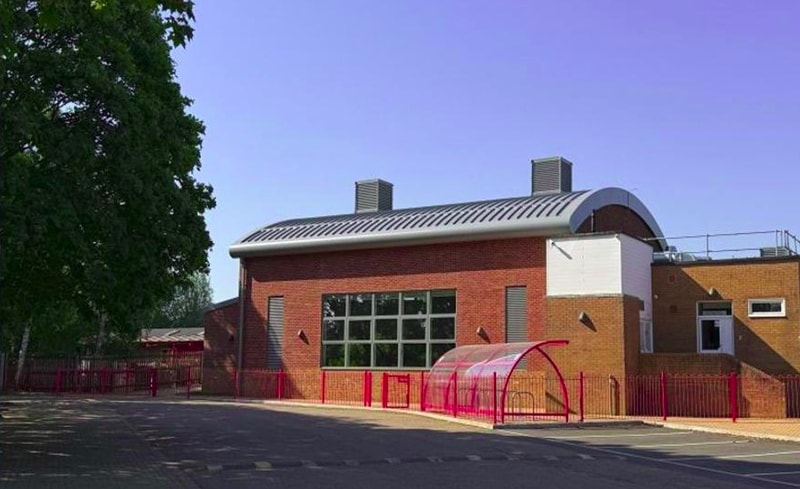
Pupils at Bloxham Primary School, which has faced an increased demand for places, also got to see the benefits after a £2.8m programme of renovations and improvements was completed by Oxfordshire County Council, thanks to S106 funding.
A new school hall with storage was built, the previous hall was repurposed as a multifunctional teaching space, and an existing building was refurbished to provide a kitchen.
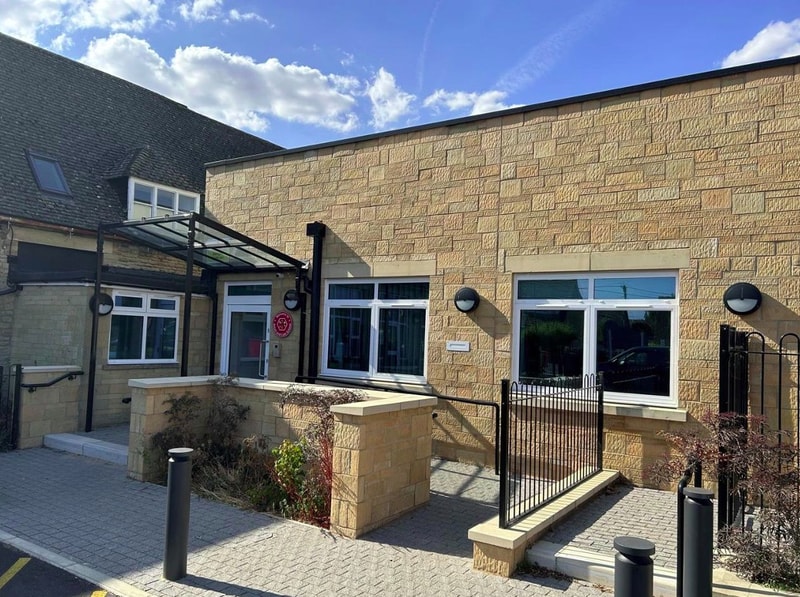
Also reaping the benefits was a new and improved Witney Library which reopened in December 2025, following a comprehensive programme of modernisation – delivered by the council and partly funded by developer contributions.
Improvements included new windows, more efficient heating, and a complete refurbishment, making it brighter, warmer, and more energy efficient.
The interior was redesigned to create a flexible space with new shelving, public computers, and areas with electric sockets for customers who wish to work.
A new community meeting room was also created, alongside a vibrant and expanded children’s area.
Meanwhile £6.6m was allocated to 27 transport schemes in 2025-26, including £2.8m for Access to Witney, £1m on the Benson Relief Road and £800,000 on the Tramway Road accessibility scheme in Banbury.
S106 money is held for specific purposes related to development and cannot be spent on general council services. In most cases, the projects they relate to are large and complex, can take many years to come forward, and have trigger points when payments can be made.
The council has been in the spotlight in recent years due to the amount of S106 money – currently £261.9m – held in its reserves.
Cllr Levy added: “We know we still have much to do. There is nearly £262m of unspent funding we still hold, the bulk of which is for education projects which usually can only be built after a development has largely been completed.
“This is money meant for communities and so it is only right it comes under scrutiny. We try to make sure we hold on to funds no longer than is required under the terms of each S106 agreement.
“In recent years, we have been speeding up the rate at which S106 funds are spent, and the reserves are now falling steadily. We are committed to continuing this trend and delivering a host of improvements for residents across the county.”
Last year, the council approved a scheme to speed up its ability to spend tens of millions of pounds of developer contributions through an accelerated delivery plan. By investing £4m of additional funding, it could fast-track 33 schemes that otherwise faced delays due to various barriers and funding gaps, unlocking £27.5m of S106 funding.
The council has also brought in an infrastructure pipeline for projects in development across Oxfordshire. It shows future infrastructure requirements, monitors funding sources and developer contribution commitments, and tracks projects as they progress towards delivery.
It helps identify delays due to external factors, such as dependency on wider development, land availability, third-party requirements, or statutory approvals.
It also highlights internal barriers to delivery, enabling the council to take proactive action to unblock projects where possible.
Sign up to hear from us and receive the latest news and updates in our fortnightly newsletter, Your Oxfordshire.